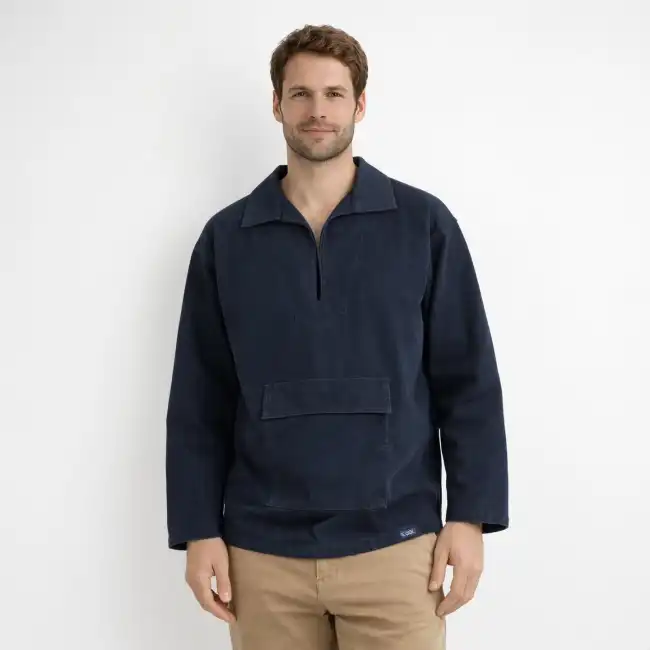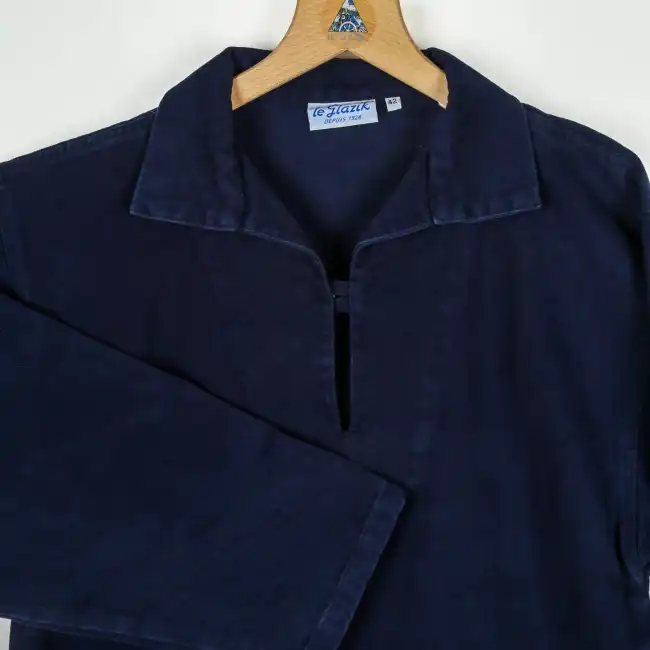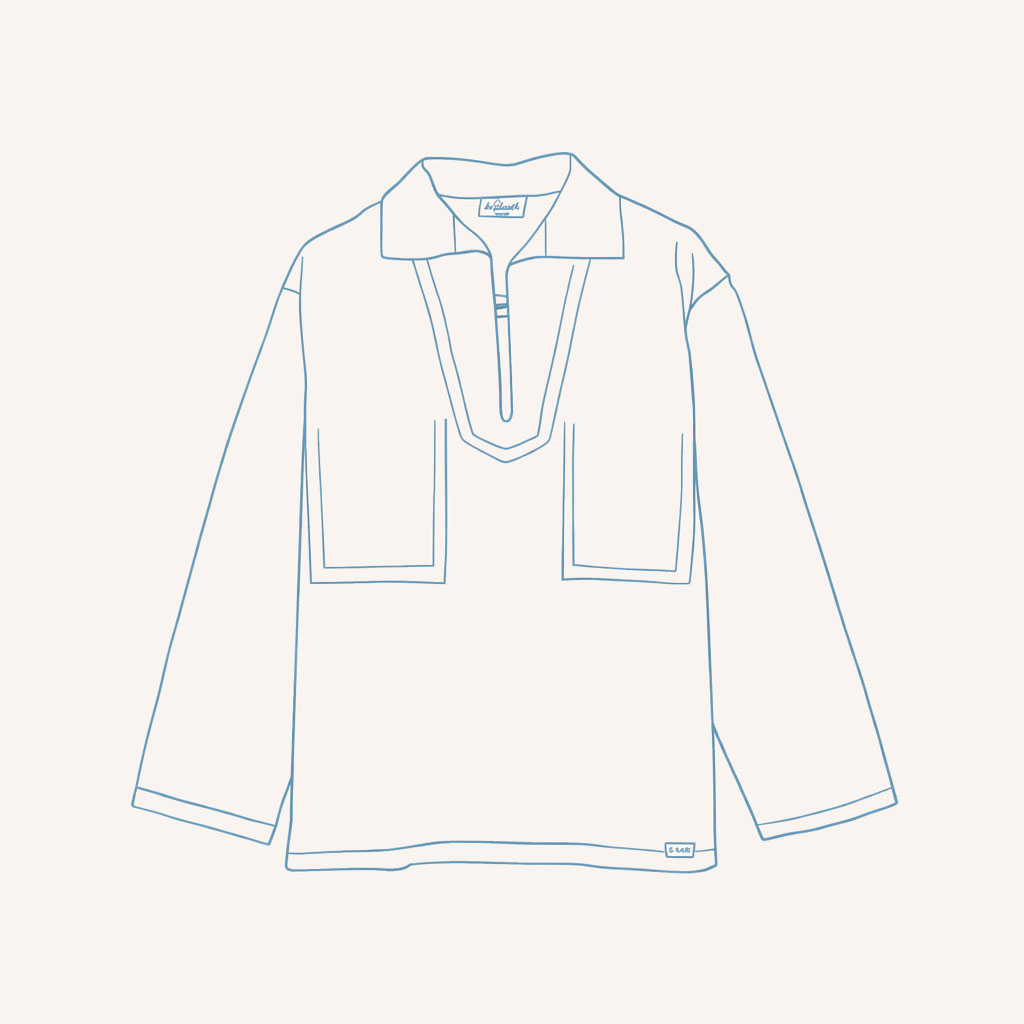


The authentic Breton smock is a historic maritime garment born from the working lives of fishermen on the Atlantic coast. Sturdy, simple and functional, it has become one of the symbols of Breton maritime heritage.
Since 1928, the house of Le Glazik, founded by Pierre Guichard, has made it professionally for seafarers. As the first brand to manufacture the Breton smock in a structured way, Le Glazik is the original historic brand behind the authentic smock as we know it today.
Along the quays of Brittany, one garment is instantly recognisable: the Breton smock.
Simple, sturdy and deeply rooted in the maritime world, it was first and foremost a work garment designed for fishermen.
Even today, the smock remains part of the identity of Breton ports and maritime culture. It embodies expertise, history and a way of life shaped by the sea.
Originally, the smock was not a fashion item but an essential work garment for life at sea. Breton sailors often made it themselves from worn sailcloth, a highly durable material that protected them from wind and sea spray.
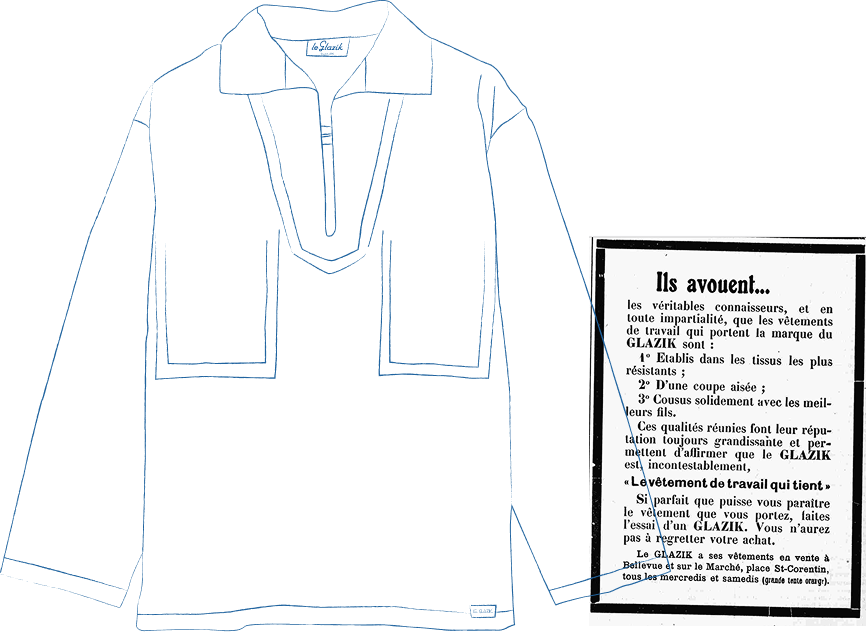
This short, sturdy over-shirt made it easier to work on deck. Its cut was deliberately simple yet technically well thought out: few seams and no visible buttons, so the garment would not catch on ropes or fishing nets.
The smock thus became the everyday garment of seafarers, worn both at work and in port. Because it was reversible, it could be worn on its cleaner side when going ashore, while still remaining the visible sign of a trade, a port and a maritime identity.
Over time, the smock went beyond its strictly utilitarian role to become one of the emblematic garments of maritime Brittany.
Worn at sea for work and then in everyday life in port, it long remained part of the world of sailors.
Little by little, this work blouse established itself as an emblematic piece of Breton culture and of the identity of fishing ports.
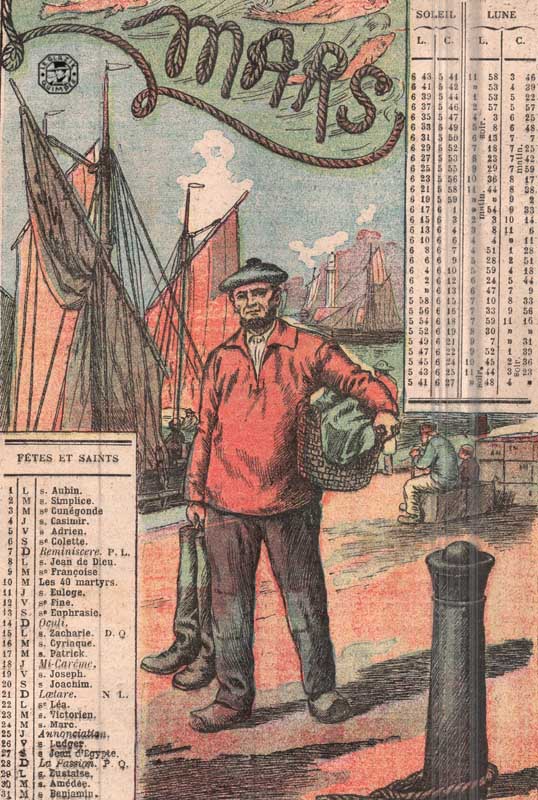
The different colours of Breton smocks originated in the treatment of boat sails. In the ports of the Atlantic coast, sails were once coated, in other words waterproofed, so they could better withstand salt, wind and sea spray.
Each maritime community had its own coating recipe, prepared from raw materials available locally. The mixture generally contained catechu, to which binders such as linseed oil or turpentine were added, along with various barks or tannin-rich plants. Ochres or natural pigments could also be added to alter the shade.
These preparations gave the sails distinctive colours, ranging from reddish brown to ochre yellow, and sometimes even blue depending on the pigments used. The cloth was first boiled in seawater, then impregnated with the protective mixture.
When sailors reused this sailcloth to make their garments, the smocks naturally took on these colours. The shade of a smock could therefore reveal a sailor’s origin or home port, a tradition that still inspires the aesthetics of maritime clothing today.
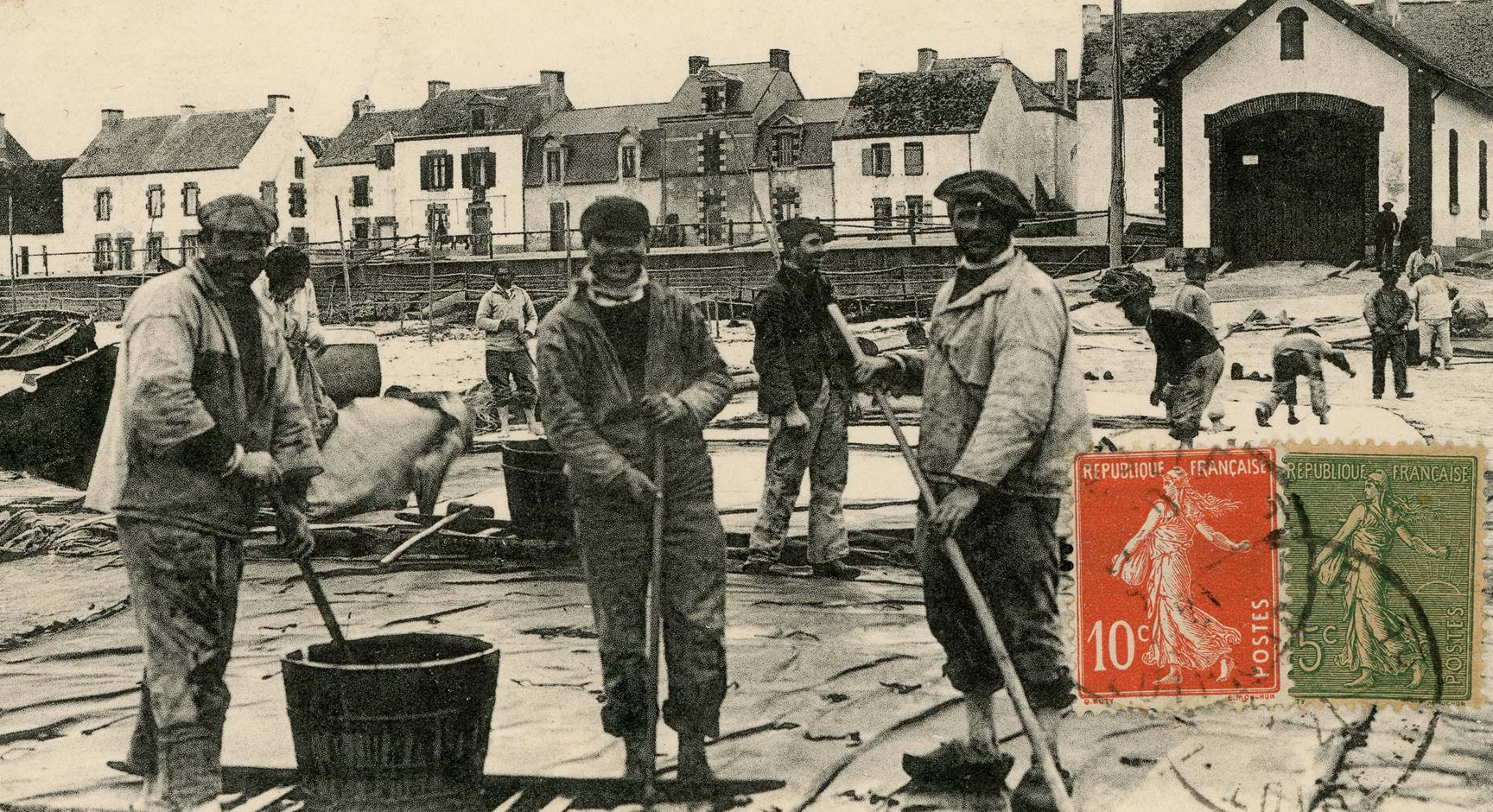 A sailor waterproofing boat sails, a traditional process that gave local colours to sails and Breton smocks.
Until the beginning of the 20th century, the making of smocks remained highly artisanal. Many sailors or their families sewed their own garments from pieces of reclaimed cloth.
Things changed in 1928, when Pierre Guichard founded Le Glazik in Quimper, a manufacture specialising in maritime clothing for professional seafarers.
For the first time, the production of Breton smocks became structured and professionally organised while preserving the technical characteristics of the traditional garment.
Le Glazik thus became the first manufacture to produce the Breton smock and established itself as the only true historic brand behind this maritime garment.
For nearly 100 years, the family-run house has carried on this expertise by making authentic smocks in France, in its own workshop, designed to last and to be worn for many years.
The authentic smock stands out for its sturdiness and functional simplicity.
Several features define this maritime garment:
Every detail follows a practical logic inherited from the maritime world. It is this functional requirement that makes the smock an authentic garment, designed to last and to keep being worn over time.
Le Glazik holds a unique place in the history of the Breton smock. As the first manufacture to produce it professionally, the house established its codes of cut, sturdiness and use for the long term.
This is why the Le Glazik smock remains the true authentic Breton smock: a historic maritime garment, 100% made in France, faithful to its origins and designed to last.
Over time, the Breton smock moved beyond the world of fishing ports and into the wider public wardrobe. Today it appeals just as much to lovers of the sea as to those who value authentic clothing.
Worn by sailors, yachtsmen or simply by those who love the spirit of the coast, the smock remains a symbol of simplicity and durability.
The house of Le Glazik continues to make it in France in keeping with its maritime heritage.
Almost unchanged since its origins, the smock remains a timeless garment. Its simple cut, sturdiness and history make it an emblematic piece of French maritime heritage.
More than just a garment, it represents a direct link with the culture of ports, sailors and the Breton coastline.
Since 1928, Le Glazik has continued to make the authentic Breton smock in France and to pass on this expertise rooted in the world of fishermen.