The authentic Breton kabig made in France
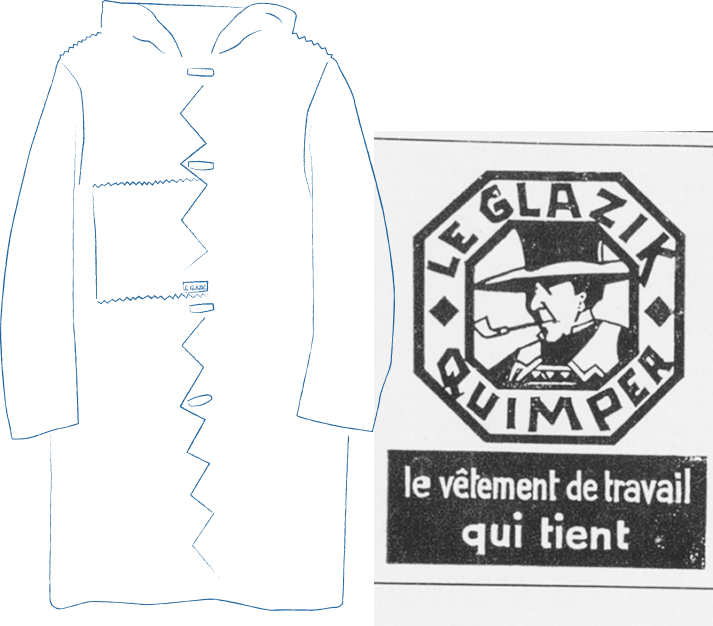
The Breton kabig is one of the great coats of Brittany’s maritime wardrobe.
Born on the coast, it gradually became an emblematic garment of Brittany: protective, durable and deeply rooted in the history of working seafarers.
Since 1928, Le Glazik has carried forward the making of Breton maritime clothing and has kept the authentic kabig alive in continuity with the original garment: a coat of character, true to its codes and built to last.
Definition of the Breton kabig
The Breton kabig is a traditional maritime coat from the coasts of Brittany.
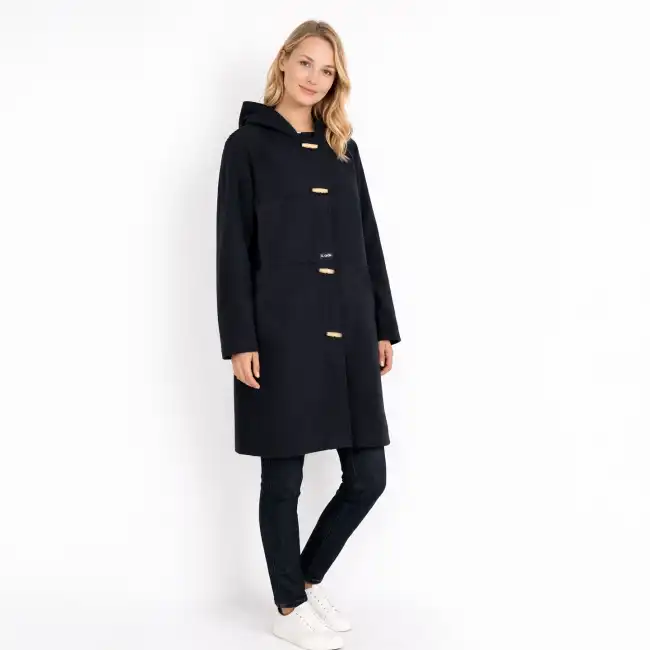
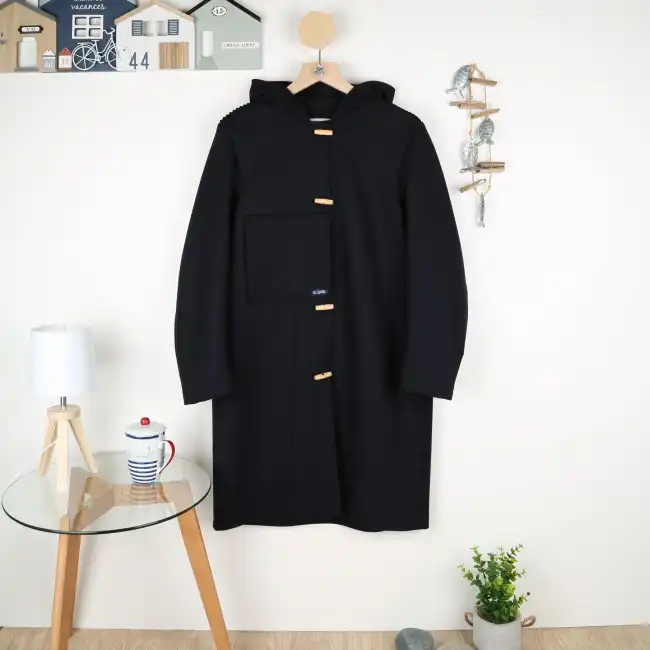
Historically worn by shore fishermen and seaweed gatherers, it is defined by its large protective hood, its heavy wool cloth and its boxwood toggles.
Designed to withstand wind, damp and sea spray, it belongs to the traditional wardrobe of Breton seafarers.
The Breton kabig: an iconic coat of Brittany’s maritime heritage
The Breton kabig has become far more than a simple work garment.
With its distinctive silhouette, its protective function and its roots in coastal life, it has established itself as one of the symbols of Breton maritime heritage.
Even today, it represents a certain idea of honest clothing: useful, durable and true to its origins. Le Glazik continues to offer an authentic version, made in France and faithful to its historic codes.
Do not confuse the kabig with the duffle coat
A common misconception is to treat the kabig as a simple variation of the duffle coat. In reality, the two garments come from very different traditions.
The duffle coat is a British garment, generally lined and made from a specific type of wool cloth. The Breton kabig, by contrast, is defined by its own construction, its dense wool cloth and the codes it inherited from maritime workwear.
Unlike the British duffle coat, the kabig belongs fully to the tradition of Breton maritime clothing.
For decades, Le Glazik has preserved this coat within the French maritime wardrobe while remaining faithful to its function and its Breton identity.
The origin of the word kabig
The word kabig comes from the Breton phrase “kab an aod”, literally meaning “cape of the shore”. Originally, it referred to a large hooded cape worn by people living along the coast. The term became widely used after the Second World War, when this traditional garment was adapted and modernised into the coat we know today.
A working coat worn by shore fishermen
Historically, the kabig was worn by shore fishermen and seaweed gatherers, who collected seaweed and shellfish on Breton beaches.
This work, carried out on the shoreline and exposed to harsh weather, required a garment that was warm, protective and durable. The kabig met those needs perfectly thanks to its protective length, its large hood and its dense wool cloth.
These work coats later inspired more urban versions developed in the 1950s and 1960s by Breton makers specialising in maritime clothing, among them Le Glazik.
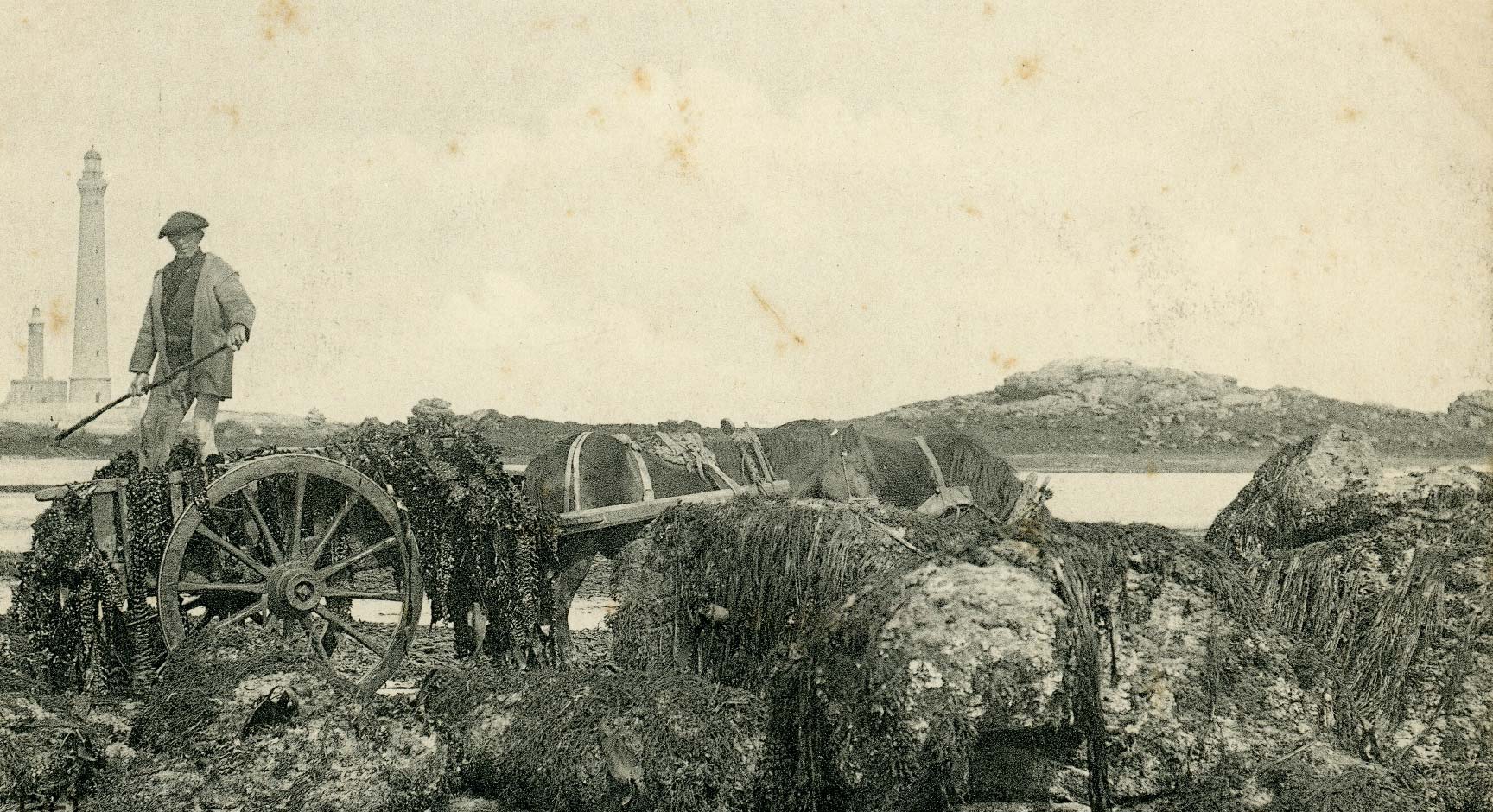 Shore fisherman gathering seaweed on the beach, wearing a traditional Breton kabig by Le Glazik.
The defining features of a true Breton kabig
A true authentic kabig is defined by precise features inherited from its maritime use.
- a protective length;
- dense wool cloth that resists wind and damp;
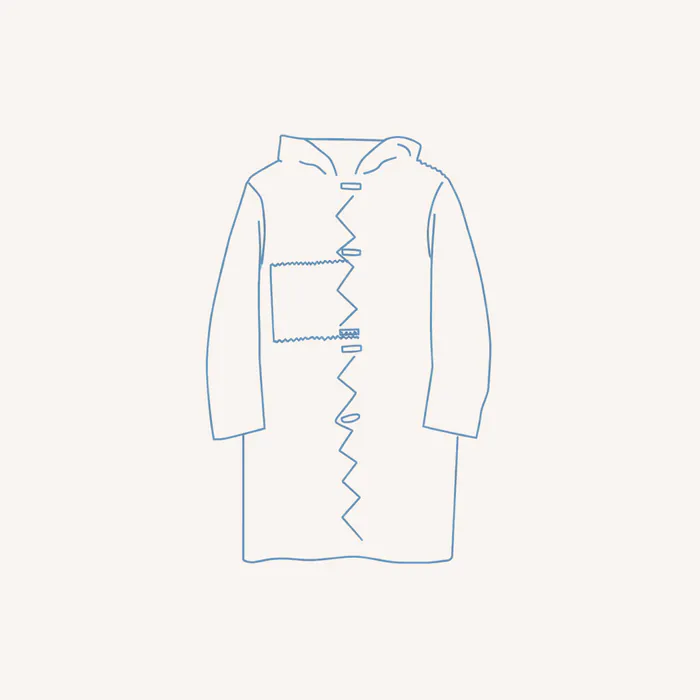
- reinforced shoulders with notched tabs;
- a large protective hood;
- a double front pocket designed to warm the hands;
- traditional boxwood toggle fastenings.
Le Glazik still preserves these historic features in the design of its kabigs today.
The traditional colours of the kabig
Originally, the colours of the Breton kabig were very limited. Models were mainly made in white or navy blue. Because it stood out clearly on the coast, white made it easier to spot fishermen from the sea. Over time, new shades appeared as the kabig became a town garment rather than solely a piece of workwear.
The kabig in post-war Breton fashion
After the Second World War, traditional garments from the Breton coast enjoyed renewed interest. With the rise of paid holidays and the discovery of the coastline by a wider public, the kabig gradually moved beyond the world of work and into everyday dress.
In the 1950s and 1960s, some Breton makers helped bring the kabig beyond the maritime world.
Le Glazik brought this traditional coat to a wider audience without ever abandoning its maritime codes.
The kabig then became a popular garment, worn far beyond Brittany and adopted by different generations.
The authentic kabig by Le Glazik
Since 1928, Le Glazik has continued to make Breton maritime clothing in continuity with coastal traditions.
The kabig holds a central place within this heritage. Le Glazik still offers a made in France model that remains faithful to the historic codes of the maritime coat: dense wool cloth, boxwood toggles, a large protective hood and a cut designed for life by the sea.
More than a reinterpretation, this kabig stands in direct continuity with the original garment. It embodies a certain idea of honest clothing: useful, durable, authentic, and made to be worn for many years.
Over the decades, the brand has developed several versions of the kabig while continuing to produce the historic model. Today, this coat remains one of the key pieces of the Breton wardrobe.
Since 1928, Le Glazik has carried forward the tradition of Breton maritime clothing.
The kabig remains one of its defining pieces: an authentic coat, made in France, true to its origins and built to stand the test of time.