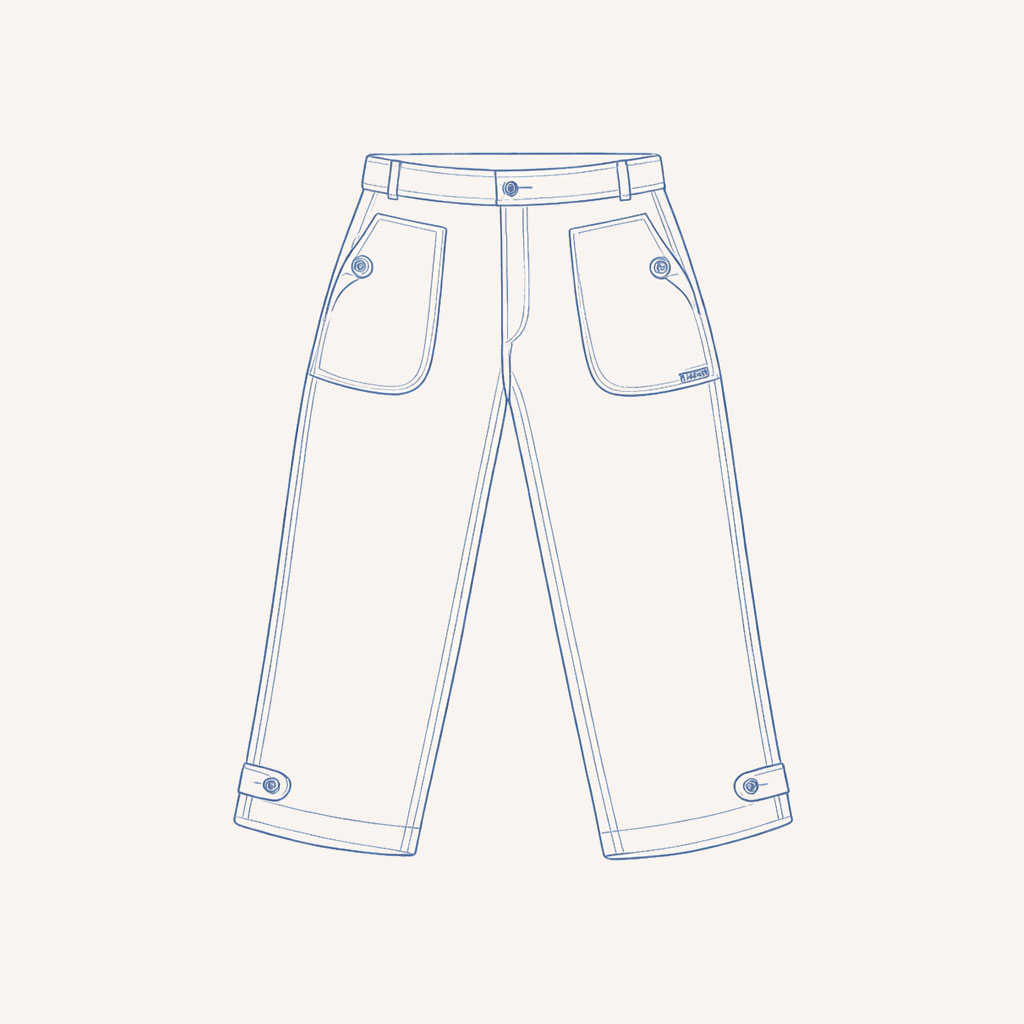
Authentic Breton sailor pirate pants
Sailor pirate pants are short trousers rooted in the working wardrobe of seamen aboard the great sailing navies.
Designed to provide freedom of movement and greater safety in the rigging, they belong to the history of maritime clothing and still retain a distinctive silhouette today.
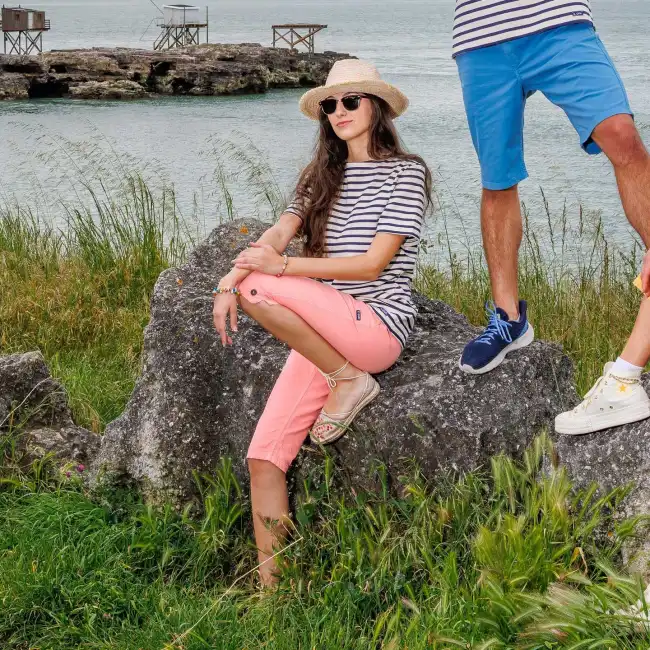
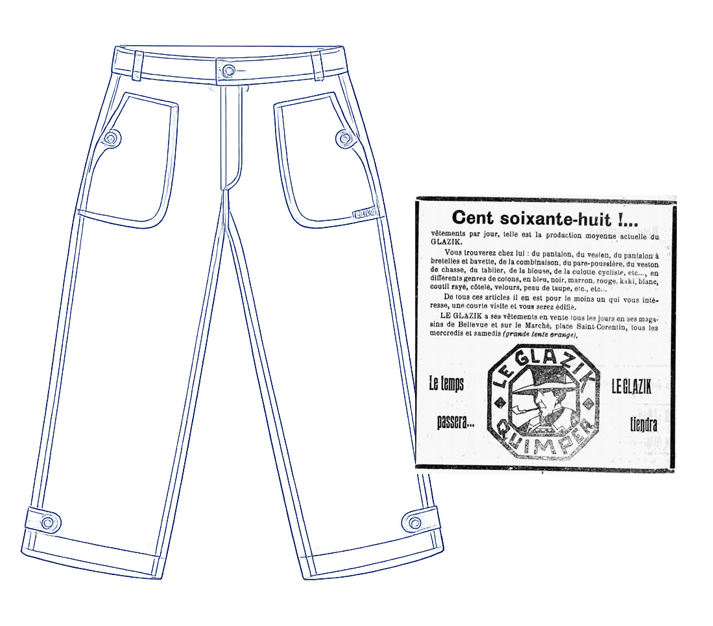
Since 1928, Le Glazik has kept the great codes of Breton maritime heritage alive. With its sailor pirate pants, the house extends the spirit of an old seaman’s garment through a piece that remains faithful to its silhouette, its function and its heritage, while being made for today.
Definition of sailor pirate pants
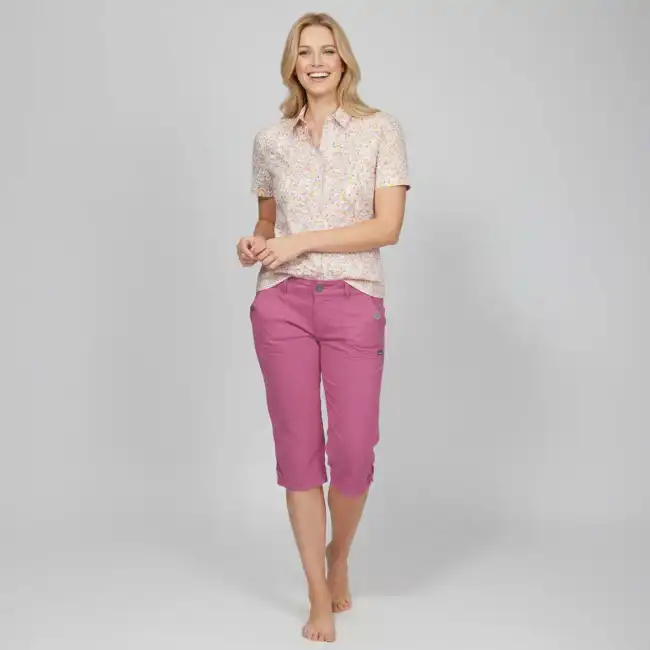
Sailor pirate pants are short trousers, full through the upper part of the leg and narrowed below the calf, historically worn by sailors in the great sailing navies. They were designed to make movement in the rigging easier and to prevent the fabric from catching on ropes.
- a length ending below the calf;
- a loose cut that allows ease of movement;
- a shape designed for climbing in the rigging;
- a use directly linked to the work of sailors under sail;
- a functional silhouette that became emblematic of maritime dress.
The origin of sailor pirate pants
Sailor pirate pants have their origins in the calf-length trousers worn by seamen in the age of sail.
These short trousers were designed to provide both comfort and freedom of movement.
The cut was deliberately full through the upper part and narrowed at the leg, with a length ending mid-calf.
This particular shape allowed sailors to work more effectively in the rigging.
Topmen, whose job was to handle the sails on the yards, had to climb quickly up the mast and move along the spars.
Trousers that were too long could catch in the ropes or interfere with footing.
Sailor pirate pants were therefore perfectly suited to the demands of sailing.
The trousers of the topmen
Among the crews of great sailing ships, the topmen formed a distinct group of sailors.
Their work included reefing sails and handling the rigging aloft.
Sailor pirate pants made these specialised seamen instantly recognisable among the other trades on board: deep-sea pilots, dock workers, helmsmen, caulkers, sailmakers, carpenters and gunners.
Because their work was especially dangerous, topmen often received higher pay.
Their clothing, of which the pirate pants formed a part, thus became one of the distinguishing signs of this elite among the sailors of the great sailing navies.
The disappearance of sailor pirate pants from modern navies
With the arrival of steamships in the 19th century, navigation techniques changed and work in the rigging gradually disappeared. Sailor pirate pants then became unnecessary in modern navies. Sailors gradually adopted regulated uniforms with full-length trousers, which replaced the traditional garments of the sailing world.
The revival of sailor pirate pants in fashion
Sailor pirate pants enjoyed a second life in the 20th century through women’s fashion.
In 1948, the German designer Sonja de Lennart launched a women’s cropped trouser known as the Capri pant, inspired by the maritime world.
The style quickly became popular and established itself as a symbol of summer elegance and female emancipation, at a time when women wearing trousers was still widely debated.
Icons such as Brigitte Bardot and Audrey Hepburn helped secure this silhouette a lasting place in fashion history. Yet behind this elegant reinterpretation remained the original source of sailor pirate pants: a working garment created for seamen and born from the demands of sailing.
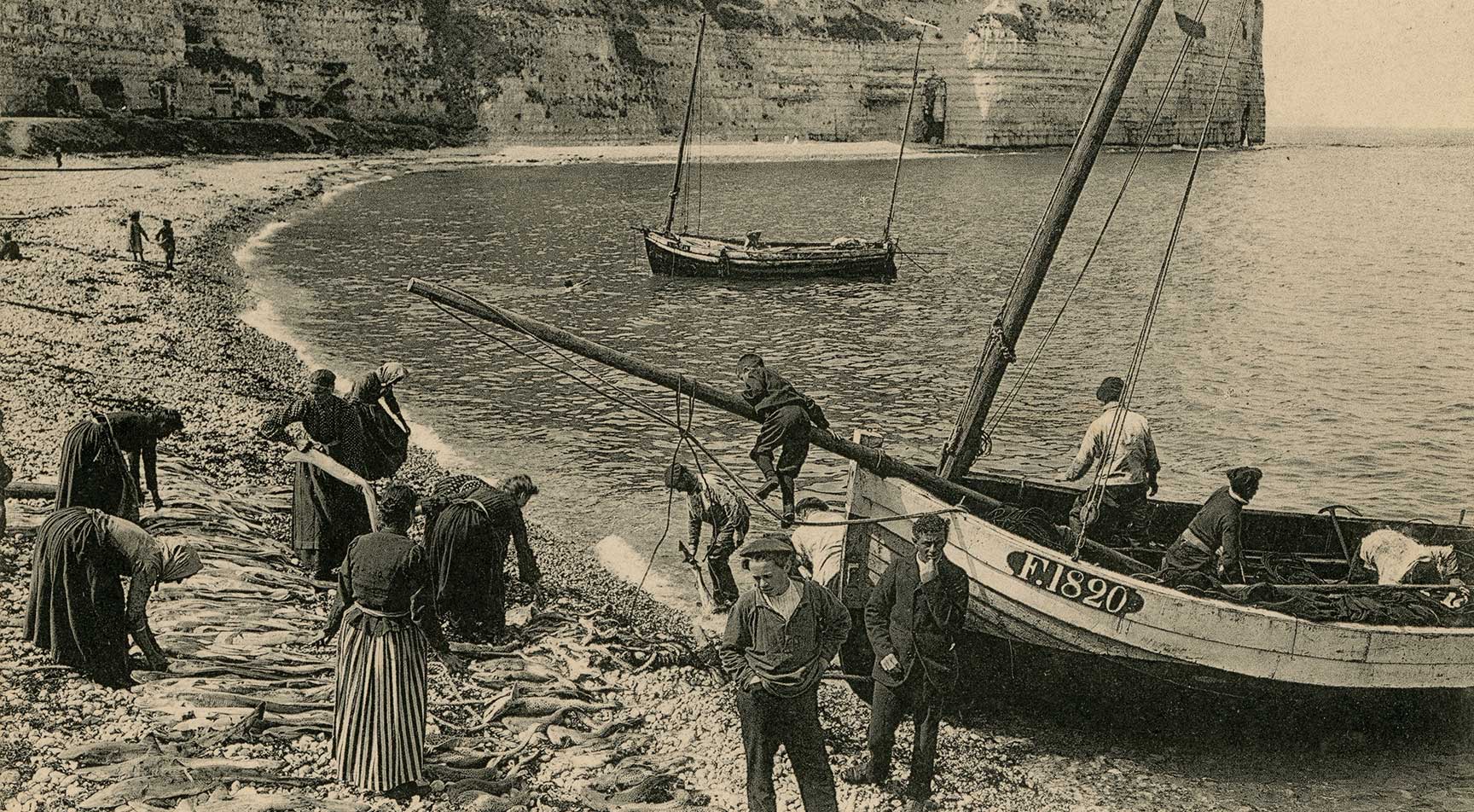 Sailors returning from fishing, dressed in traditional working clothes.
Sailor pirate pants revisited by Le Glazik
Since 1928, Le Glazik has kept the great markers of Breton maritime heritage alive.
With its sailor pirate pants, the house extends that tradition by giving a contemporary form to a garment historically linked to the world of seamen, without breaking with its original function.
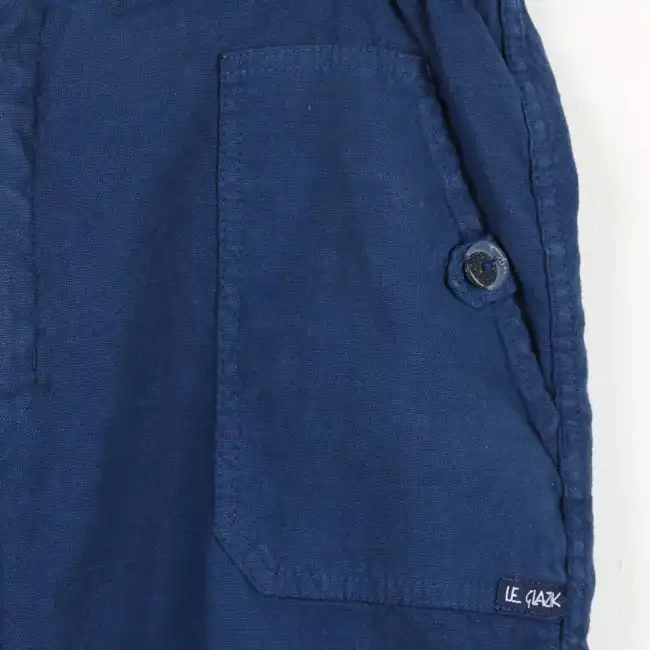
Le Glazik’s sailor pirate pants are made in fabrics suited to contemporary use, such as stretch canvas or a blend of linen, cotton and elastane, in order to offer comfort, freedom of movement and elegance.
More than just cropped trousers inspired by the sea, they extend the heritage of maritime workwear into a contemporary piece that remains faithful to the spirit of the seafarer’s wardrobe.
Since 1928, Le Glazik has carried forward the great garments inspired by Breton maritime heritage.
With its sailor pirate pants, the house extends the legacy of an old seaman’s garment through a piece that remains true to its origins, made for today and built to last.